

Sleep Hacks for Parents: How to Help Your Baby and You Sleep Better
November 7, 2025
The Ultimate Car Travel Hacks for Parents with Babies
November 14, 2025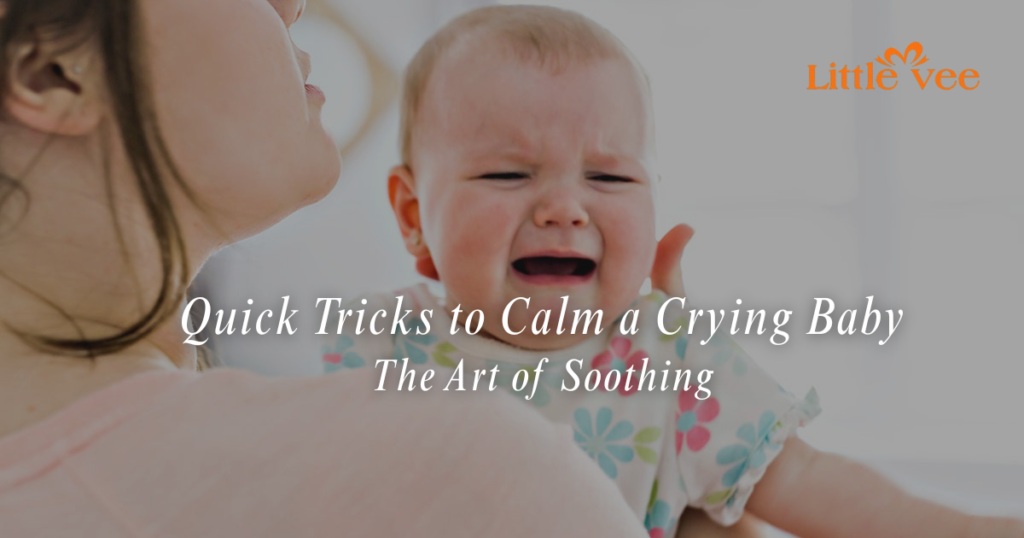
Every parent knows that heart-tugging moment — your baby starts crying, and you’ve already tried feeding, changing, rocking, and singing. The room is quiet except for those tiny wails, and you find yourself wondering, what else can I do?
First, take a deep breath. Babies cry — it’s how they communicate. Sometimes they’re hungry, sometimes they’re tired, and sometimes they just need comfort. The good news? With time and a few gentle techniques, you’ll begin to understand your baby’s unique cues and find your own rhythm of calm. Here are some soothing tricks that can help ease your crying baby and bring a sense of peace back to your home.
1. Swaddling: A Warm Hug for Your Baby
Swaddling can work wonders, especially for newborns. It mimics the snug feeling of being in the womb — warm, safe, and secure.
Use a soft, breathable cotton or muslin blanket and gently wrap your baby so their arms are tucked in but hips have room to move. Many parents find that swaddling helps reduce startle reflexes and encourages better sleep too.
If your baby resists being fully swaddled, try wrapping only the lower body, leaving the arms free. It’s all about finding what makes your baby feel most comfortable.
2. Gentle Motion: Rock, Walk, or Bounce
Babies are comforted by rhythmic movement — it reminds them of your gentle motions during pregnancy. Try slowly rocking in a chair, swaying side to side, or walking around the room while holding your baby close.
If you’re exhausted (and we’ve all been there), a baby swing or bouncer on a low setting can offer the same soothing motion — but always supervise and avoid letting your baby sleep unattended in it.
3. Soothing Sounds: White Noise and Soft Music
A quiet room can sometimes make babies uneasy, especially when they’re used to the muffled noises of the womb. White noise machines, gentle shushing sounds, or even the hum of a fan can be surprisingly comforting.
Some parents swear by lullabies or soft instrumental music. You can even sing — your voice, no matter how off-key you think it is, is your baby’s favorite sound in the world.
4. Offer Comfort Through Touch
Sometimes, all your baby needs is the reassuring feel of your skin. Try holding them close against your chest — skin-to-skin contact works beautifully for calming both baby and parent.
It helps regulate your baby’s body temperature, heart rate, and breathing — and it reminds them that they’re safe and loved.
5. Check the Basics
Before diving into soothing techniques, always make sure your baby’s basic needs are met:
- Is the diaper wet or dirty?
- Is your baby hungry or gassy?
- Is the temperature too warm or too cool?
Sometimes the simplest fixes — a fresh leakproof baby diaper, a burp, or a layer adjustment — can turn cries into coos within seconds.
6. Stay Calm — Your Baby Feels Your Energy
It’s easier said than done, but your calm presence matters more than you realize. Babies can sense tension, and your steady voice or gentle heartbeat can be the most soothing thing of all.
If you feel overwhelmed, it’s okay to set your baby down safely in the crib for a few minutes while you take a breath. You’re not alone in feeling this way — every parent has been there.
Remember: soothing isn’t just about stopping the crying baby; it’s about building trust and comfort between you and your baby.
Final Thoughts
Every baby is unique. What works today might not work tomorrow, and that’s perfectly normal. With time, you’ll discover your baby’s favorite ways to be comforted — maybe it’s a gentle hum, a soft swaddle, or just your steady heartbeat.
Parenting isn’t about getting it right every time. It’s about showing up with love, patience, and presence — and that’s exactly what you’re already doing. 💕
FAQs
1. Why does my baby cry even after feeding and changing?
Babies cry for many reasons — they might be tired, overstimulated, gassy, or simply craving closeness. Try gentle motion, white noise, or skin-to-skin contact to comfort them.
2. How long should I let my baby cry before soothing them?
There’s no set rule — especially for newborns. Responding promptly helps your baby feel secure and builds trust. Over time, you’ll learn to recognize different cry patterns.
3. Is it okay if my baby only calms down when held?
Yes! Babies seek comfort through closeness. Holding your baby doesn’t “spoil” them — it helps them feel safe and strengthens your bond.