
Diaper Rash Myths Busted: What Really Causes It and How to Prevent It
July 10, 2025
How Often Should You Change Your Baby’s Diaper?
July 17, 2025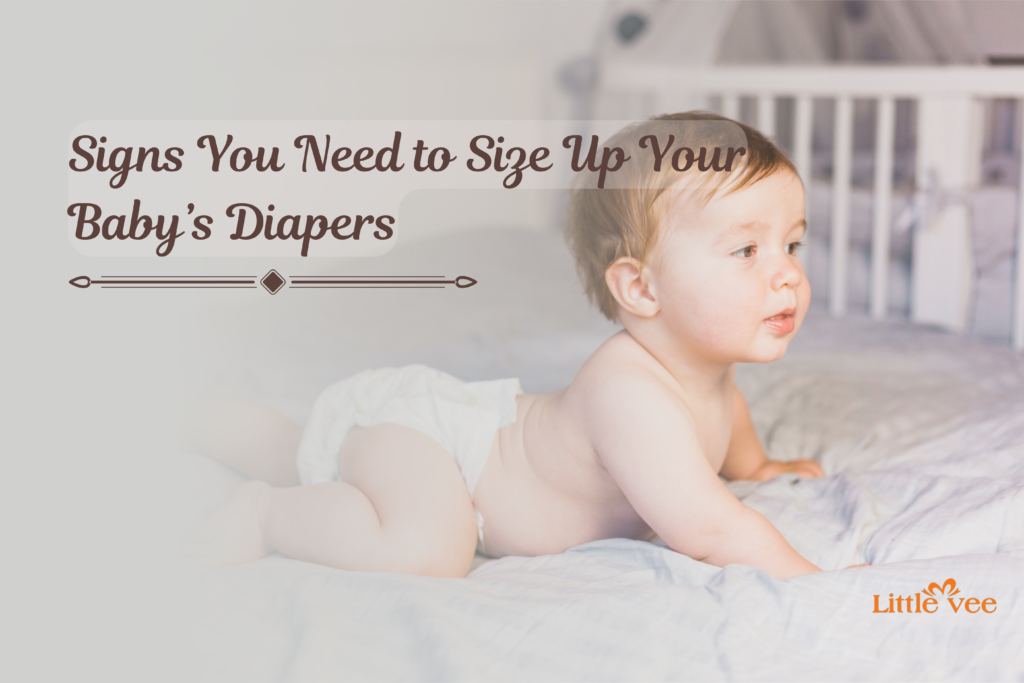
Choosing the right diaper size is essential for your baby’s comfort, hygiene, and overall health. As your baby grows, so do their needs — and their diaper size is no exception. A diaper that’s too small can cause leaks, rashes, and discomfort, while a properly sized diaper helps keep your baby clean, dry, and happy. But how can you tell when it’s time to size up baby diapers? Here are some clear signs it’s time to move to the next diaper size.
1. Frequent Leaks or Blowouts
One of the most obvious signs that your baby needs a bigger diaper is an increase in leaks or blowouts. If the diaper can’t contain your baby’s pee or poop, it’s likely because it’s too small and can’t hold as much as it used to. Leaks can happen during naps or overnight, while blowouts often escape from the waistband or leg cuffs. A well-fitted diaper should hold everything in without overflow.
2. Red Marks Around the Waist or Thighs
Check your baby’s skin during diaper changes. If you notice red, irritated indentations around the waist or thighs, the diaper is likely too tight. Diapers should fit snugly but not leave marks. These pressure marks can cause discomfort and even lead to chafing or rashes if not addressed. A larger diaper will provide more room without squeezing your baby’s delicate skin.
3. Difficulty Fastening the Tabs
If you’re struggling to get the diaper tabs to close or you find yourself pulling them tightly to make them stick, the diaper is probably too small. The tabs should meet in the center of the waistband with minimal effort. Forcing them to stretch too far can result in a diaper that fits poorly and may not stay in place.
4. Baby’s Weight Exceeds the Diaper’s Size Guidelines
Each diaper brand includes a recommended weight range for its sizes. If your baby’s weight is at or above the upper limit for their current size, it’s time to size up — even if the fit still seems okay. Babies grow quickly, and staying ahead of the growth curve helps prevent issues with leaks, discomfort, or skin irritation.
5. Exposed Skin at the Waist or Legs
A well-fitting diaper should completely cover your baby’s bottom and stomach without gaps. If you notice that your baby’s diaper is riding low in the back or there’s skin peeking out around the thighs, it’s likely too small. Exposed skin can lead to leaks, especially when your baby is sleeping or moving around.
6. Your Baby Seems Uncomfortable or Fussy
Babies can’t always tell us what’s wrong, but if your little one seems unusually fussy or uncomfortable, it could be due to an ill-fitting diaper. A tight diaper can restrict movement and cause unnecessary pressure, especially as your baby becomes more active. Switching to a larger size may help them feel more relaxed and mobile.
7. Frequent Diaper Rash
Diaper rash can be caused by many factors, including moisture, friction, and tight-fitting diapers. If your baby is experiencing more frequent or severe diaper rashes, check the diaper fit. A too-small diaper traps moisture and creates more friction, both of which can lead to rashes. A larger size may improve airflow and reduce irritation.
8. Tabs Don’t Stay Closed
If the diaper tabs keep popping open, especially as your baby wiggles or crawls, the diaper size might be too small. The waistband should be secure but flexible. Tabs that can’t stay fastened are a sign the diaper is under strain and needs to be replaced with a better-fitting size.
Tips for Choosing the Right Diaper Size
- Follow brand guidelines but observe your baby’s fit and comfort.
- Try a trial pack before buying in bulk when switching sizes.
- Consider growth spurts – babies often outgrow diapers quickly.
- Check fit during movement – crawling, rolling, and walking can all affect how well a diaper performs.
Final Thoughts
Sizing up your baby’s diaper isn’t just about age or weight — it’s about fit, function, and comfort. Regularly monitoring how the diaper looks and feels on your baby helps ensure they stay clean, dry, and happy. If you’re noticing any of the signs above, it’s probably time to try the next size. Trust your instincts, and when in doubt, go bigger — it’s better to have a diaper that’s a little roomy than one that’s too snug.