
Difference Between Daytime & Nighttime Diapers: What Parents Should Know
December 12, 2025
How to Reduce Waste in Your Baby’s First Year
December 19, 2025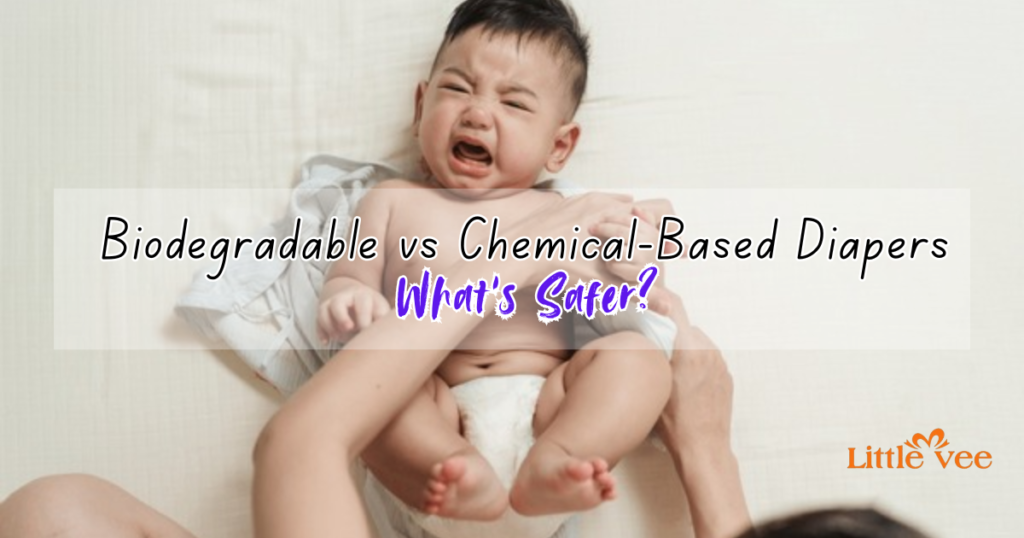
When you’re a parent, every choice feels important—especially when it involves something your baby wears 24/7. Diapers are one of those decisions we rarely stop to analyze, yet they play a huge role in your baby’s comfort, skin health, and even the environment. If you’ve been wondering whether biodegradable diapers are actually safer than conventional, chemical-based diapers, you’re not alone. Let’s break it down in a simple, supportive way so you can make the best choice for your little one between Biodegradable vs Chemical-Based Diapers.
What Makes a Diaper “Biodegradable”?
Biodegradable diapers are designed to break down more quickly than regular diapers. They’re typically made from natural or plant-based materials such as bamboo fiber, responsibly sourced wood pulp, or corn-based polymers. These materials help the diaper decompose faster once disposed of, reducing long-term landfill waste.
But more than sustainability, biodegradable diapers often stand out for another reason: they’re usually gentler on your baby’s skin. Many brands avoid harsh chemicals, lotions, dyes, and fragrances—ingredients known to irritate sensitive skin.
What Are Chemical-Based Diapers Made Of?
Regular baby diapers—the ones most commonly found in stores—combine a mix of plastics, absorbent gels, adhesives, and synthetic fibers. These are the diapers most parents grew up with, and they’re known for:
- High absorbency
- Overnight leak protection
- Affordable prices
- Wide availability
However, they may also contain things like fragrances, chlorine-based bleaching agents, phthalates, dyes, and lotions. While not every baby reacts to these ingredients, sensitive skin can become irritated, leading to redness, rashes, or dryness.
Which Option Is Safer for Baby Skin?
Here’s the gentle truth: every baby is different. Some little ones never react to mainstream diapers, while others develop rashes quickly.
But overall, biodegradable diapers are often considered safer for sensitive skin because they avoid many of the top irritants found in standard diapers. Fewer chemicals mean fewer chances of skin reactions.
Look for biodegradable diapers that are:
- Fragrance-free
- Lotion-free
- Chlorine-free
- Phthalate-free
- Made with plant-based fibers
These features help create a more breathable, skin-friendly environment for your baby’s bottom.
How Do They Compare Environmentally?
This is where biodegradable diapers shine. Traditional diapers can take hundreds of years to decompose. Biodegradable diapers break down faster, especially when made with compostable natural fibers.
But it’s important to be realistic—no diaper breaks down instantly, and most municipal waste systems don’t offer commercial composting. Still, choosing biodegradable options significantly reduces long-term environmental impact.
Absorbency & Performance: Is There a Difference?
A few years ago, biodegradable diapers didn’t match the performance of chemical-based ones—especially for overnight use. But things have changed.
Many natural diapers today offer:
- Strong leak protection
- High absorbency
- Soft, cloud-like feel
- Better breathability
If you want both skin safety and strong performance, choose a biodegradable diaper that includes a premium plant-based core and hypoallergenic materials.
So… Which Should You Choose?
If your priority is skin safety, low toxicity, or environmental responsibility, biodegradable diapers are often the better choice.
If you prioritize affordability, overnight performance, or easy local availability, chemical-based diapers might still fit your lifestyle.
For many families, a hybrid approach works best— diapers during the day is biodegradable vs chemical-based diapers options for long nights. The key is choosing what feels right for your baby and your family’s needs.
FAQs
1. Are biodegradable diapers safe for newborns?
Yes, most biodegradable diapers are gentle enough for newborn skin. Their reduced chemical content makes them a great option for babies prone to irritation.
2. Do biodegradable diapers cost more?
Generally, yes—but many parents feel the extra cost is worth it for fewer rashes, better ingredients, and eco-friendly benefits.
3. Are chemical-based diapers harmful?
Not always. Many mainstream diapers are tested for safety, but they can contain potential irritants like fragrances or lotions. Babies with sensitive skin may react to these ingredients.