
How to Store Diapers Properly for Maximum Freshness
November 28, 2025
Baby Skin Care in Winter: The No-Rash Routine
December 2, 2025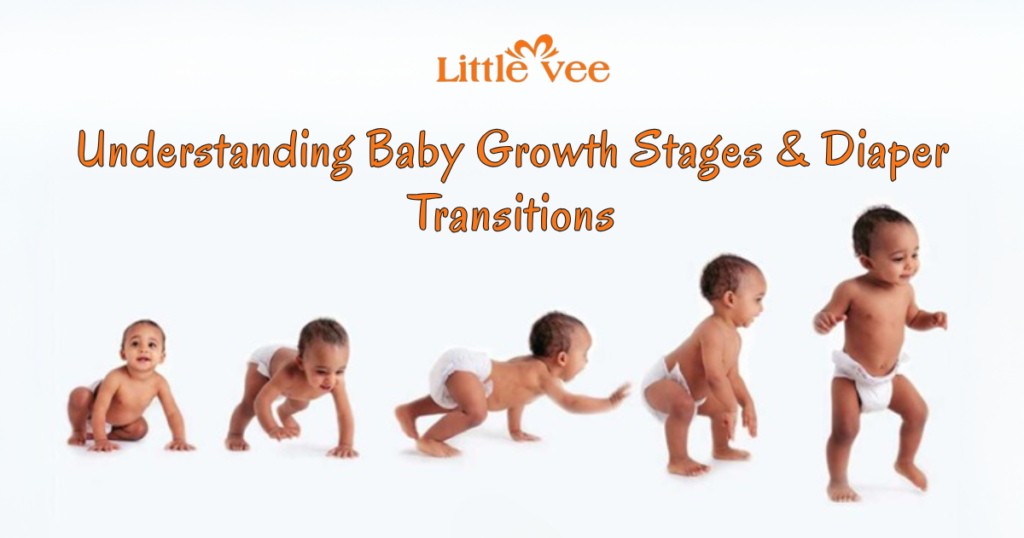
Watching your baby grow is one of the most rewarding parts of parenthood. Every new milestone—whether it’s their first smile, first roll, or first wobbly steps—comes with tiny changes in their daily needs. One of the most important (yet often overlooked) areas is diaper transitions. As your little one grows, their diaper needs change too, and choosing the right size and type can make a big difference in comfort, dryness, and ease for both of you. Let’s walk through the major baby growth stages and understand when—and how—to adjust diapers smoothly and safely.
Newborn Stage: The Snuggly Beginning (0–2 months)
During the newborn phase, babies have delicate skin and tiny bodies that need extra-gentle care. Newborn diapers are designed with a soft, flexible fit and often include an umbilical cord cut-out.
Signs the diaper fits well:
- The waistband sits comfortably below the belly button
- No red marks around the legs or tummy
- No frequent leaks or blowouts
Most babies stay in newborn diapers or gentle shea butter diapers for newborns for only a few weeks. If your baby is nearing 10 lbs, experiencing leaks, or the tabs no longer reach the center, it may be time to move to Size 1.
Infant Stage: Rolling, Wiggling, and Growing Fast (2–6 months)
This stage brings a big growth spurt, more movement, and more feeding—often leading to more frequent diaper changes.
Diaper transition tip:
If your baby suddenly starts leaking at night or the diaper looks overly snug, go up one size even if you haven’t hit the recommended weight yet. Every baby grows at their own pace, and fit matters more than the number on the package.
Look for diapers that offer:
- Soft, stretchy leg cuffs
- Breathable materials
- Good overnight absorbency
- Hypoallergenic or skin-friendly ingredients
Sitter Stage: Exploring the World from the Floor (6–12 months)
Once babies begin sitting, their posture changes how diapers fit. They may need more flexibility around the waist and thighs, especially as baby fat redistributes.
Common signs your baby needs the next diaper size:
- Gapping around the legs
- Compression marks on the belly
- Leaks during naps or nighttime
- Difficulty fastening the tabs evenly
Many parents transition to Diaper size 3 104 count or 4 during this stage.
Crawler to Toddler Stage: High Movement, High Needs (12+ months)
When your little one begins crawling, cruising, or walking, they need a diaper that moves with them. Babies at this stage love to wiggle out of diapers or refuse to lie still—so flexible, secure designs are key.
Some parents shift to training pants around 18–24 months, but it depends entirely on your child’s readiness.
A well-fitted diaper should:
- Stay snug during movement
- Prevent leaks while sleeping
- Offer stretch without digging in
- Allow airflow to avoid rashes
How to Know It’s Time to Size Up
Trust your instincts, but also look out for these clues:
- Frequent side or back leaks
- Difficulty closing the waistband
- Skin irritation around the thighs or tummy
- Baby seems uncomfortable, especially after feedings
A well-fitting diaper shouldn’t sag excessively or squeeze tightly. If you’re unsure, size up—babies grow quickly, and a slightly bigger diaper often offers better coverage.
Final Thoughts
Understanding your baby growth stages makes diaper transitions feel much more intuitive. Every baby growth stages brings a new opportunity to support their comfort and development. Don’t hesitate to adjust sizes based on fit, not age—your baby will tell you what they need through little signs. And remember, you’re doing great. Parenting is a learning journey, and noticing these small details makes you a wonderfully attentive caregiver.
FAQs
1. How do I know if my baby’s diaper is too small?
If you notice red marks, leaks, or difficulty fastening the diaper, it’s likely too small. Babies also get uncomfortable when a diaper is too tight.
2. Should I follow the diaper weight chart exactly?
Not always. Every baby’s body shape is different. If the diaper looks tight or leaks frequently, it’s completely fine to size up early.
3. When do babies switch to training pants?
Most toddlers start using training pants between 18–30 months, but it depends on potty-training readiness, not age.